
The Acceleration Is Real. Most Leaders Are Still Watching.
The last thirty days alone should remove any doubt that AI is accelerating faster than most leaders expected.
OpenAI surpassed $25 billion in annualized revenue and is moving toward an IPO. Anthropic’s revenues are approaching $19 billion. Apple is reimagining Siri as a fully agentic assistant. A bipartisan group of U.S. Senators has introduced legislation to study AI’s workforce impact. The stock price of the online fashion and lifestyle retailer Zalando surged 12% in a single session because AI-generated images now produce 70% more content at the same cost, slashing their ad spend.
A major headline every few days, each one larger than the last.
If you felt like you couldn’t keep up with the pace of change in 2025, I have some uncomfortable news: 2026 is moving even faster.
I’m living this myself. I pay close attention to this space and I still feel like I’m chasing it. Every week there is a new capability, a new tool, a new application that makes the previous week’s understanding feel incomplete.
The honest answer is that no one is fully keeping up.
But there is a real and widening difference between leaders who are in the water and leaders who are only dipping their toes in or watching from the deck.
I want to share three things with you today: where the job numbers actually stand, what the right level of personal AI engagement looks like for senior executives, and what I’m specifically asking you to do in the next thirty days.
The Job Market Data Is In: Hard Truths Behind the Headlines
The revised 2025 labour data is now out, and the picture is becoming clearer.
- 696,000 U.S. job cuts announced in the first five months of 2025, an 80% jump from the prior year.
- Entry-level job postings have fallen 35% since early 2023.
- The unemployment rate among college graduates aged 20–24 hit 9.5% in September 2025, nearly double the general adult rate, with only 30% securing full-time work in their field.
- Computer science graduates now face higher unemployment (6.1%) than philosophy majors (3.2%).
The jobs that are disappearing first are not manual labour. They are the knowledge economy roles many organizations depend on: analysts, programmers, customer service, legal support, data entry, and market research.
Workers aged 22 to 25 in the most AI-exposed occupations have seen a 13% decline in employment since 2022.
We joked about the “Age of the Plumber.” It is less of a joke with every passing quarter. Electricians, construction workers, and nurses are among the growth occupations of the next decade.
Anthropic’s CEO has projected that AI could eliminate half of all entry-level white collar jobs within five years and push overall unemployment into the 10–20 percent range. That view is no longer coming from the fringe. It is coming from the companies building the technology.
It’s No Longer a LLM. It’s Doing Actual Work.
Here is the shift that most business leaders haven’t fully absorbed yet, and it matters more than any single headline.
For the first two years of mainstream AI, the tools were impressive but narrow: summarize documents, draft emails, answer questions.
That era is largely over.
What is emerging now is agentic AI: systems that don’t just respond, they act. They conduct research autonomously, build and execute code, analyze competitors, process insurance claims from intake to payout, manage supply chain disruptions end-to-end, and complete multi-step workflows without human intervention at each stage.
The numbers are beginning to reflect this shift. By the end of 2026, roughly 40% of enterprise applications are expected to integrate task-specific AI agents, up from less than 5% in 2025. Organizations deploying agentic systems are reporting 20–40% reductions in operating costs and double-digit improvements in margins.
Dario Amodei, CEO of Anthropic, penned an essay where he framed the moment starkly. Within a few years he posits, AI systems will operate with the equivalent intelligence of top researchers across many fields, working far faster than human teams and acting autonomously in the world. Not in a decade. Within a few years.
How Much Time Should You Actually Be Spending on This?
This is the question I hear most from executives.
The research is surprisingly consistent: executives who personally use AI tools are significantly more likely to lead organizations successfully deploying them.
Employees who receive more than five hours of structured AI exposure are 12 percentage points more likely to become regular users. The single greatest predictor of organizational AI success is not sponsoring a committee or funding a pilot project – it is senior leader personal engagement.
My own prescription: four to seven focused hours per week.
Not reading articles about AI. Not attending presentations. Actually using it on real work.
I want to be honest with you here, because I think it matters. I find the pace of change genuinely hard to keep up with.
That is not a reason to disengage. It is the reason to engage.
The leaders who will navigate this well are not the ones who fully understand it. They are the ones willing to stay in contact with it as it advances.
What I’m Asking You to Do
In the next week, I want you personally to spend a few hours using an AI tool. Not your team, not your assistant, not your CTO. You.
Actually put AI to work on something that matters to you.
Have it develop a project you’ve been thinking about. Ask it to assess your competitive landscape. Build a business case. Analyze a strategic question you have been sitting on. Build a predictive smart dashboard.
And if you haven’t already, read the articles referenced below. Then ask AI to summarize them and analyze what the implications might be for your business.
The key word is you.
For the same reason you do not outsource your understanding of your financials, you cannot outsource your understanding of this technology.
These are exactly the kinds of conversations we are having inside our peer advisory boards, where leaders compare notes, share what they are actually deploying inside their companies, and help each other stay on the curve.
The question is no longer whether to engage. The question is how deep and rapid the coming reinvention will be.
Questions for Leaders
- Have you personally spent four or more focused hours using an AI tool in the last week, not delegating or reading about it, but actually using it on a real business problem?
- Which entry-level and mid-level roles in your industry, and therefore your organization, are most exposed to AI displacement, and are you and your team actively addressing the consequences?
- If the pace of change seen in the last thirty days accelerates over the next twelve months, what in your current business model, hiring plan, or cost structure needs to be rethought now?
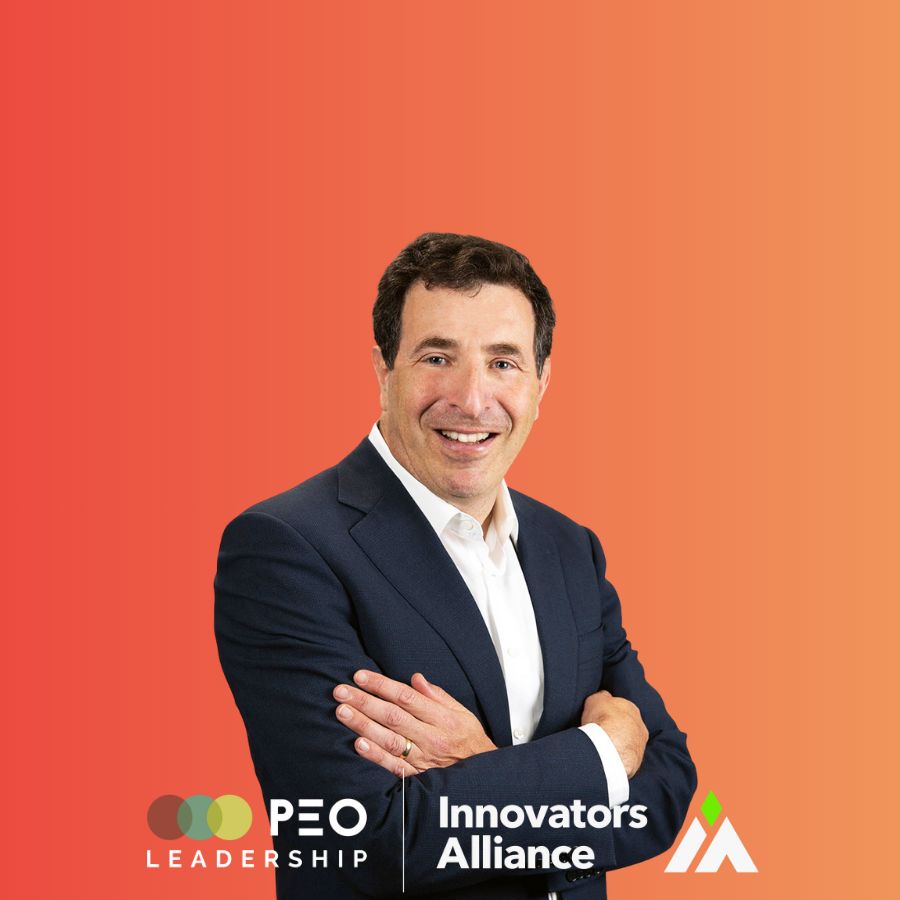
— Leon Goren
CEO, PEO Leadership | Innovators Alliance
Go Deeper
Article 1 — The Adolescence of Technology — Dario Amodei, Anthropic
Article 2 — The 2028 Global Intelligence Crisis — Citrini Research
Article 3 — Labor Market Impacts of AI — Anthropic Research